
Welcome to socialism.org
We're committed to localism, and to market socialism in the form of mutualism. Technomutualism, to be precise: people, communities and the tools they share, living in symbiosis, each making the others stronger.

Decentralised software that helps communities flourish.
The BeanPool Project is a free, open-source app that a street, a village, a co-op or a union branch runs for itself. Neighbours use it to trade help, goods and skills, on a server the community owns, with no company in the middle and no switch at the top.
Free to use, free to run, and its code is open for anyone to read, copy and improve. It puts the idea into practice: the things we depend on every day should be owned and run by the people who depend on them.
The global community is open to anyone, with no invite, in 25 languages. It's a place to explore BeanPool, try some of its real features, and get help finding a community near you or starting your own. It's deliberately limited: the full set of tools comes when your community runs its own server.
On a spare computer, or a rented server for a few dollars a month. The guide walks you through it.
Offline mode: it works if the lights go out
If the internet and the phone network go down, a BeanPool community can keep going. If your community isn't already running locally on a low-powered laptop, a Raspberry Pi or another small server, restore your latest backup to one in the town hall. Add a battery and a solar panel, and anyone who joins its Wi-Fi keeps trading on their own phone. Every trade is still recorded, and the community carries on when the internet comes back.
In the news
 Who gets seen in an election?
In the last weeks of the vote, one campaign alleged that a single company had cut the reach of its posts. The court ordered the company to prove it treats both sides equally.
Al Jazeera ↗
 Governments say: be ready for three days
Households are asked to be ready for three days without power, water, phone signal or internet, as France, Ireland and the Netherlands already advise.
news.com.au ↗
 Tracking switched off, tracking still on
Forty states said the biggest search company kept recording people’s movements after they had turned location tracking off. It paid nearly $392 million to settle.
NPR ↗
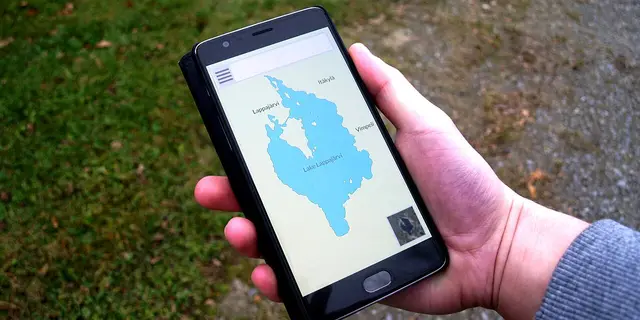
Photos: voting machine, Alejandro Zambrana/TSE (public domain); earthquake kit, Toby Oxborrow (CC BY-SA 2.0); phone with map, Santeri Viinamäki (CC BY-SA 4.0). All cropped.
More in the news ↓Why local
More and more of daily life runs through a few companies far away: the news we see, the markets we sell in, the way we reach each other, often the money itself.
That is convenient until it is not. The same few companies can watch where we go, keep what we say, decide whose voice is heard, and give way when a government leans on them, and nobody outside gets a say. It keeps happening: see the news below.
A community that flourishes keeps what it needs most close enough to see: food, skills, care, and a way to reach each other, run by people you can name, still working on a bad day. That is what localisation means here. Not cutting yourself off from the world, but not leaving everything you need behind one switch you do not control. And when work and trade stay local, the value they make stays local too, instead of flowing up and out.
Off the big platforms
On a big platform you are a tenant. The owner writes the rules and can change them overnight. A formula you cannot read decides who sees your post. Your neighbours, your customers and your history are kept on the owner's servers, so leaving means leaving them behind.
BeanPool is built the other way round. Each community runs its own server: a spare computer at home, or a rented one for a few dollars a month. The people, the posts and the record of every trade live there. The community's own members, and the people they choose, are its moderators. The code is open, so anyone can read the rules. Nothing about it needs beanpool.org, our servers or our permission: a community can use its own web address, copy the software, and leave with its own records at any time.
Many small communities instead of one giant one: that is what decentralised means here. If one stops, the others keep going, and there is no single place where anyone can switch them all off.
How it works
- Post what you can offer and what you need. A lift to the shops, a repaired bike, an hour of tutoring, a box of lemons, a ladder to borrow.
- Trade in Beans instead of money. Everyone starts at zero. Helping someone earns Beans; getting help spends them. Once you have started trading and have something on offer, you can go below zero, and the limit grows as you trade. There is no interest.
- The community keeps its own record. Every trade is written on the community's own server: not a bank's, and not ours.
- A shared pool, spent by vote. A fee of 1.5 % on each market trade, and a small monthly fee on the part of a balance above 200 Beans, go to the community's own pool. Gifts are free. The members decide what the pool pays for.
- Private where it matters. Direct messages are encrypted between the two phones, so nobody in the middle reads them.
It is not a cryptocurrency: no coin, no blockchain, nothing to buy or sell. It is not a bank. It shows no ads and takes nothing from a trade. Source and licence: github.com/beanpool-org/beanpool (AGPL-3.0). Copy it, run it, improve it.
The tool is new. The idea behind it is very old.
Technomutualism
A market socialism for the century ahead: markets and prices stay, and the people who do the work own the tools, the credit and the rules.
Mutualism is not new
Mutualism means people meeting their needs by pooling what they have, as equals: not as charity, and not for a boss's profit. It is as old as neighbours. Burial clubs and rotating savings circles still serve many millions of people across Africa, Asia and Latin America. In 1844 a group of working people in Rochdale, England, opened a shop owned by its customers, and their rules became the model for co-operatives worldwide. The rural credit co-operative Friedrich Raiffeisen founded in Germany in 1864 is the idea today's credit unions, with hundreds of millions of members, descend from. Swiss businesses have given each other credit through the WIR network since 1934. In Brazil, since Banco Palmas opened in Fortaleza in 1998, more than 160 community banks have run their own local currencies.[1]
Market socialism: markets without masters
Markets are good at one thing: matching what people have with what people need. Market socialism keeps that, and changes who owns. Instead of distant owners taking the profit and banks lending money into being at interest, the people who do the work own the enterprise, and the community issues its own credit. The worker co-operatives of Mondragon in Spain, founded in 1956, grew this way into one of the country's largest business groups.
What is new is the techno part
Mutual projects have often worked brilliantly and then hit the same walls: bookkeeping that wore out the volunteers, paper credits that could be forged or over-printed, members who had to trust the bookkeeper with no way to check, groups too small and far apart to trade, and one licence or one founder that made them easy to shut down.
Today a phone in every pocket can do the bookkeeping. Credit is written to a record, not printed on paper. The rules are open code that anyone can read. Many small servers mean no single place to shut down. The walls that broke mutualism can now be handled by tools its own members own.
The idea, its history, and the hard questions.
The watchful eye of big tech: in the news
Some of these were proven, some were settled, and some are still allegations. Together they show how much power sits with a few companies: to watch where we go, keep what we say, decide whose voice is heard, and give way when a government leans on them.
- In the last weeks of a presidential election, one campaign alleged that a single company had cut the reach of its posts. The electoral court ordered the company to treat both candidates equally, and to prove it; the company says it does. Al Jazeera, Brazilian court orders Meta to prove Lula and Bolsonaro get equal treatment; AP, Meta tells Brazil's electoral court it treats Lula and Flávio Bolsonaro equally ahead of Sunday vote.
- Europe's privacy regulators fined the owner of the biggest social networks a record 1.2 billion euros for sending Europeans' personal data to the United States after it had been told to stop. The company called the decision flawed and said it would appeal. NPR, European watchdog fines Meta $1.3 billion over privacy violations.
- The consumer regulator said staff and contractors at a home-camera company had full access to customers' videos, and that a voice assistant kept children's recordings after parents asked for them to be deleted. The owner agreed to pay more than $30 million and said it disagreed with the findings. NPR, Amazon must pay over $30 million over claims it invaded privacy with Ring and Alexa.
- Forty states said the biggest search company kept recording people's movements after they had turned location tracking off, and used what it gathered to sell advertising. It paid nearly $392 million to settle, and said the practices were old and had been changed. NPR, Google pays nearly $392 million to settle sweeping location-tracking case.
- As the polls opened, the two biggest app stores removed the opposition's voting app. Officials had threatened fines and called the app election interference, and police visited one company's Moscow office to enforce a court order. CBC News, Opposition app pulled from online stores as Russians go to polls.
- The biggest social network said the personal data of up to 87 million people may have been improperly shared with a political consultancy, which was alleged to have used it to try to influence elections. The firm denied wrongdoing. ABC News, Facebook says up to 87m people affected in Cambridge Analytica data-mining scandal.
- UN investigators said the country's dominant social network had played a part in spreading hatred against the Rohingya. Al Jazeera, UN: Facebook had a 'role' in Rohingya genocide.